Find flexible positions through HVAC Jobs Only jobs listings
A Comprehensive Guide to Cooling And Heating Jobs: Abilities, Training, and Task Leads
The heating and cooling industry is a vibrant field that calls for an one-of-a-kind collection of abilities and training. Experts must possess strong interaction and problem-solving capabilities while paying close interest to information. Vocational training and certifications are vital for those seeking to enter this sector. As need for energy-efficient modern technologies grows, so do work prospects. Comprehending the requirements and paths can open varied possibilities within this sector. What are the essential elements that can influence career development?
Important Abilities for Heating And Cooling Professionals
Technological understanding is essential, Cooling and heating specialists should likewise have a diverse collection of vital skills to do well in their area. Interaction skills are critical, as service technicians typically communicate with clients to discuss intricate issues and services in understandable terms. Analytic abilities are similarly crucial; professionals have to resolve and detect heating and cooling system malfunctions efficiently.

In addition, solid attention to information guarantees that fixings and installations are completed accurately, minimizing potential issues. Physical endurance and mastery are necessary, offered the needs of the work, including raising hefty tools and functioning in restricted areas.
Time monitoring skills permit heating and cooling professionals to focus on tasks successfully, assuring prompt solution distribution. Lastly, flexibility is vital in a rapidly progressing sector where brand-new technologies and methods arise often. Jointly, these abilities enhance a HVAC professional's effectiveness, assuring they fulfill customer demands while maintaining high standards of solution.
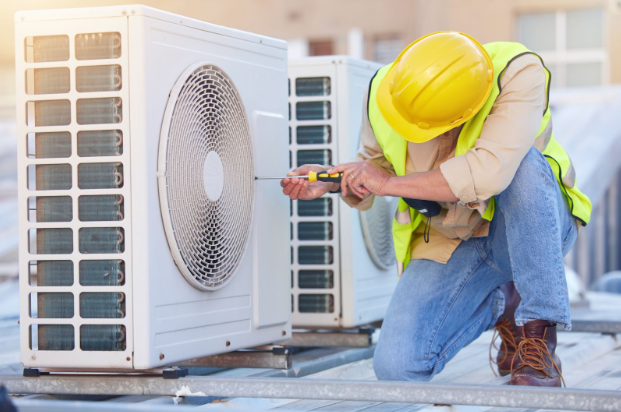
Training and Qualification Requirements
To master the HVAC sector, people need to go through certain training and obtain pertinent certifications that verify their abilities and expertise. Generally, striving heating and cooling specialists start with a secondary school diploma or matching, followed by employment training or an associate degree in a/c innovation. These programs commonly cover essential concepts, system design, and repair strategies.
Along with formal education and learning, acquiring certifications from acknowledged companies, such as the Environmental Security Agency (EPA) and North American Specialist Quality (NATE), is crucial. EPA certification is needed for taking care of cooling agents, while NATE qualification shows proficiency in various heating and cooling subjects.
Hands-on experience through teaching fellowships or apprenticeships even more improves a person's qualifications. Constant education and learning is also essential, as the cooling and heating industry progresses with brand-new modern technologies and policies. By satisfying these training and certification requirements, individuals place themselves for success in a competitive task market.
Job Paths in the Cooling And Heating Sector
With the essential training and accreditations in area, individuals can discover various job courses within the cooling and heating industry. Common functions include cooling and heating service technician, who executes fixings, maintenance, and setup of home heating, air flow, and a/c systems. One more choice is coming to be a cooling and heating engineer, concentrating on system design and effectiveness, typically calling for advanced education and learning in design concepts.
Furthermore, people might go after sales functions, concentrating on cooling and heating items and services, which demand strong interaction abilities and technical knowledge. Some might select to progress into monitoring placements, supervising groups and jobs while guaranteeing conformity with industry requirements. Opportunities exist in energy auditing, where specialists examine power usage in buildings and advise renovations. Each path uses distinct obstacles and benefits, dealing with varied ability sets and rate of interests within the HVAC area.
Task Potential Customers and Employment Opportunities
The HVAC sector boasts a solid need for qualified professionals, driven by the continuous demand for climate control systems in household, commercial, and commercial setups. As energy performance and environmental sustainability ended up being increasingly crucial, the demand for proficient specialists proceeds to climb. Job leads are specifically beneficial for those with specialized training and qualifications, as employers seek individuals with the most up to date understanding in energy-efficient innovations and smart a/c systems.
According to industry records, the work of cooling and heating service technicians is predicted to expand significantly over the next years, showing the industry's strength also during financial variations. In addition, as older systems need replacement and new structures arise, chances prolong to both experienced specialists and newcomers. Several HVAC companies are also increasing their solutions, developing additional openings (HVAC Jobs Only website). In general, people entering the heating and cooling field can expect a robust work market, with enough possibilities for development and security
Tips for Advancing Your HVAC Occupation
As specialists browse their heating and cooling professions, going after continuous education and specialized training can substantially enhance their development potential customers. Involving in qualification programs, such as those used by North American Professional Excellence (NATE) or the Refrigeration Solution Engineers Culture (RSES), can substantially increase a technician's reputation and data base. Networking within the industry is similarly crucial; going to trade convention, workshops, and local market events can open doors to new opportunities website here and cooperations.
Furthermore, obtaining experience in diverse locations, such as industrial systems or power performance modern technologies, allows service technicians to become versatile experts - HVAC Jobs Only job board. Creating soft skills, consisting of interaction and problem-solving capabilities, is essential for those intending for supervisory or administration roles. my site Finally, staying informed concerning market fads and arising innovations assurances that heating and cooling professionals continue to be competitive in a rapidly evolving area, placing them for lasting profession success
Frequently Asked Concerns
What Is the Average Wage for Cooling And Heating Technicians?
The average wage for cooling and heating service technicians differs by location and experience but typically varies in between $40,000 and $60,000 each year. Aspects such as accreditations and expertise can substantially influence making potential in this field.
Are There Specialized Heating And Cooling Area to Consider?
Yes, there are specialized heating and cooling areas, consisting of household, commercial, and industrial cooling and heating, in addition to locations like refrigeration, power management, and interior air quality. Each specialization uses unique abilities and job chances within the industry.
How Can I Discover Heating And Cooling Task Openings?
To discover cooling and heating work openings, individuals ought to explore on-line work boards, company internet sites, industry-specific forums, and neighborhood profession colleges. Connecting with specialists in the area can also uncover hidden opportunities and potential work leads.
What Tools Are Necessary for Heating And Cooling Work?
Important tools for heating and cooling job include multimeters, cooling agent determines, monkey wrench, air pump, and leak detectors. These instruments enable specialists to identify, fix, and webpage preserve air, home heating, and air flow conditioning systems properly and efficiently.
Can I Operate In Heating And Cooling Without Certification?
Yes, one can work in cooling and heating without qualification, although possibilities might be limited. Several employers like licensed candidates, and people without accreditation may find it challenging to breakthrough in their professions or accessibility specific work positions.
To excel in the Cooling and heating industry, individuals must go through details training and obtain appropriate certifications that validate their skills and knowledge. Typically, aspiring Heating and cooling specialists start with a high institution diploma or equivalent, complied with by occupation training or an associate degree in HVAC technology. With the required training and qualifications in location, individuals can discover numerous job paths within the Cooling and heating industry. According to market records, the work of A/c service technicians is forecasted to expand considerably over the following years, mirroring the market's resilience also throughout financial variations. Yes, there are specific Heating and cooling fields, including residential, industrial, and commercial HVAC, as well as locations like refrigeration, energy management, and indoor air quality.